By Rob Goldberg
For many, this week’s Torah portion, Tzav (Leviticus 6:1–8:36), can feel repetitive and distant. Yet beneath its detailed ritual language lies enduring insight into how our people create sacred space and sustain community.
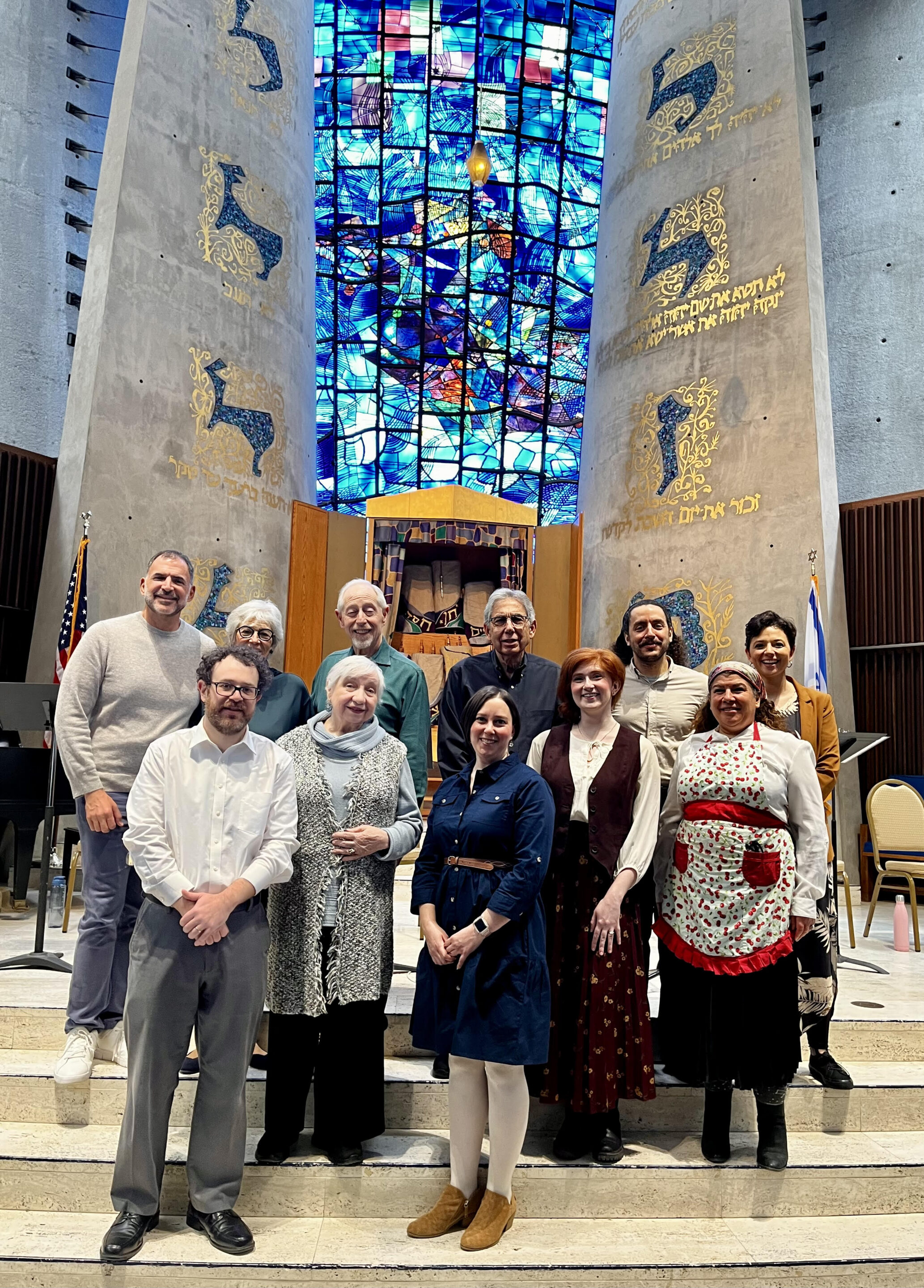 Its themes also resonate deeply with last weekend’s visit to Buffalo by playwright Victor Wishna, whose play Tree of Life, presented by the Jewish Repertory Theatre, tells the story of how a small community in Iowa grapples with the closing of its historic synagogue.
The first verses of Tzav continue the Torah’s description of the Mishkan (Tabernacle) and the sacred responsibilities of the priests. While much of the text details sacrificial practice, embedded within it is a powerful image of continuity: “A perpetual fire shall be kept burning on the altar; not to go out” (Leviticus 6:6). This earliest reference to the ner tamid, the eternal flame present in every synagogue, reminds us that Jewish life is continuous, but not automatic. It depends on people – leaders, volunteers, and members – who tend the flame, sustain sacred institutions, and guide communities through change.
In Tree of Life, the congregation’s long-serving president, Ken, reflects on his synagogue’s ner tamid, which has burned continuously since the building opened more than a century ago. Even as the community struggles to gather a minyan, and most members believe it is time to close their doors, the eternal flame inspires Ken to keep them open.
We also learn in Tzav that the korbanot (burnt offerings) were never purely individual acts. Rather, they formed a system of shared connection. The zevach shelamim (offering of well-being), for example, could be offered by anyone and was eaten communally (Leviticus 7:11–15), reinforcing that holiness is most often experienced in relationship, not in isolation. Tree of Life echoes this idea, reminding us that Jewish life flourishes when people come together in sacred community.
The portion additionally highlights the sacred responsibility of leadership through Aaron and his sons. Jewish continuity has always depended on devoted leaders – rabbis and cantors, lay volunteers and engaged members – all of whom sustain institutions and guide communities through change. In the play, Ken and others have faithfully held their congregation together, but the absence of emerging leadership makes the future increasingly uncertain.
Tree of Life captures the deep pain of losing not only a building, but also the rhythms of shared prayer, celebration, and belonging. Yet even in closure, there is hope: ultimately, the congregation’s remaining Sefer Torah finds a new home in a growing Jewish community in Colombia. Though one chapter ends in Iowa, another begins in South America. A sunset becomes a sunrise.
This message feels especially resonant for those engaged in sustaining Jewish life today. Perhaps the enduring lesson of Tzav is this: legacy and continuity remind us that holiness does not reside in buildings alone, but in the people who enliven them. Sacred space is created when communities gather with intention, care for one another, and show up for each other in moments of joy and challenge alike. Even when a sacred building closes, as in Tree of Life, its holy flame is not extinguished; rather, it is carried forward by those dedicated to ensuring that Jewish life and Jewish joy continue to flourish.
Rob Goldberg is the former CEO of the Buffalo Jewish Federation. He currently serves Federation as Senior Advisor and provides consultation to the Jewish Community Legacy Project and Trybal Gatherings.