
As Jewish American Heritage Month continues, so does Federation’s spotlight series on Buffalo Jews who have had modern influence in their respective areas of work. Today, we cast the spotlight on Gale Burstein, Erie County Health Commissioner, and the Honorable Peter Allen Weinmann, New York State Supreme Court Judge. Both features also appear in the May/June Jewish Journal.
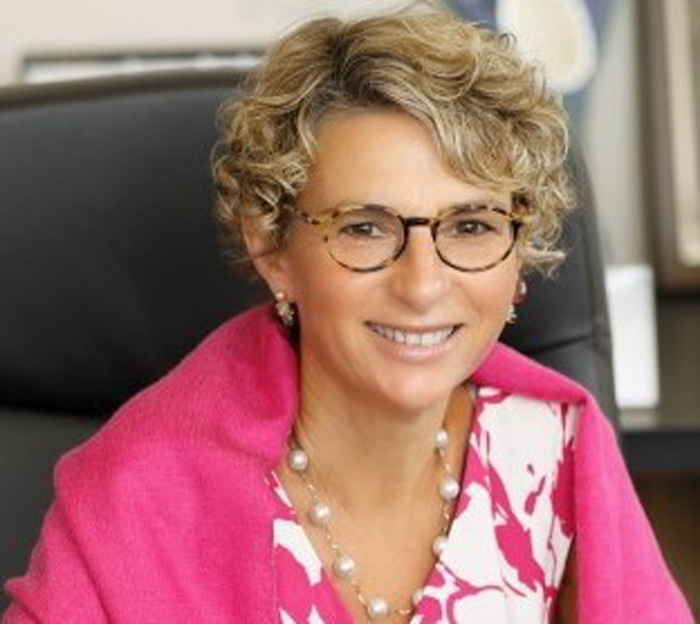 Dr. Gale Burstein
For Jewish American Heritage Month, the story of Dr. Gale Burstein stands as a powerful example of leadership, service, and the enduring influence of Jewish values in public life. A pediatrician specializing in adolescent medicine, Dr. Burstein serves as the Erie County Commissioner of Health, overseeing public health initiatives that impact nearly one million residents across Erie County, and as Clinical Professor of Pediatrics at the UB Jacobs School of Medicine.
Commitment to addressing some of the most urgent public health challenges of our time shaped Dr. Burstein’s career. From combating vaccine hesitancy to confronting gun violence, fatal overdoses, and lead poisoning, her leadership reflects both scientific rigor and deep compassion. She also prioritizes expanding access to sexual health and family planning care through a health equity lens, ensuring underserved communities receive the care they need.
Among her most defining professional moments are three experiences that illustrate the breadth of her impact. Early in her career, she conducted groundbreaking research on chlamydia infection rates among adolescents and young adults. Her findings helped inform Centers for Disease Control and Prevention (CDC) national screening guidelines. In a moment that beautifully intertwined her personal and professional identities, her landmark paper was published in the Journal of the American Medical Association (JAMA) on the same evening as her oldest son’s bris, marking her simultaneous entry into Jewish motherhood and scientific recognition.
Years later, as Erie County faced a devastating opioid crisis, Dr. Burstein led a multidisciplinary task force that helped redefine treatment approaches. Working alongside community partners, she helped establish the first clinic in the region to prescribe buprenorphine for youth. Her efforts contributed to a measurable decline in overdose deaths, positioning Erie County as a national leader in addressing the epidemic.
Perhaps most visible was her leadership during the COVID-19 pandemic. Beginning in March 2020, Dr. Burstein directed a comprehensive response that included large-scale testing, contact tracing, public communication, and mass vaccination efforts. Under her guidance, Erie County built systems that not only responded to the crisis but helped save lives and keep the community informed and protected.
Dr. Burstein credits several Jewish mentors for inspiring her journey, including Dr. Robert Ehrenreich, Dr. Evelyn Hurvitz, and Dr. Jonathan Zenilman. These role models not only shaped her medical expertise but also reinforced the ability to balance a meaningful career with a rich Jewish family life. At the core of her work is the Jewish value of tikkun olam, the responsibility to repair and improve the world. This principle guides her approach to public health, driving her to create systems that promote dignity, safety, and well-being for all.
Reflecting on her legacy, Dr. Burstein hopes she contributed to advancements in adolescent health, substance use disorder treatment, and pandemic response, while helping WNY residents feel safe, respected, and empowered. She emphasizes that none of her accomplishments would be possible with the support of her parents, Irwin & Marna Burstein, her husband, Peter Bloom, and her sons, Zachary and Joshua Bloom, who are a source of strength throughout her journey.
In celebrating Jewish American Heritage Month, Dr. Gale Burstein’s story reminds us that leadership rooted in compassion, science, and cultural values can truly transform communities.
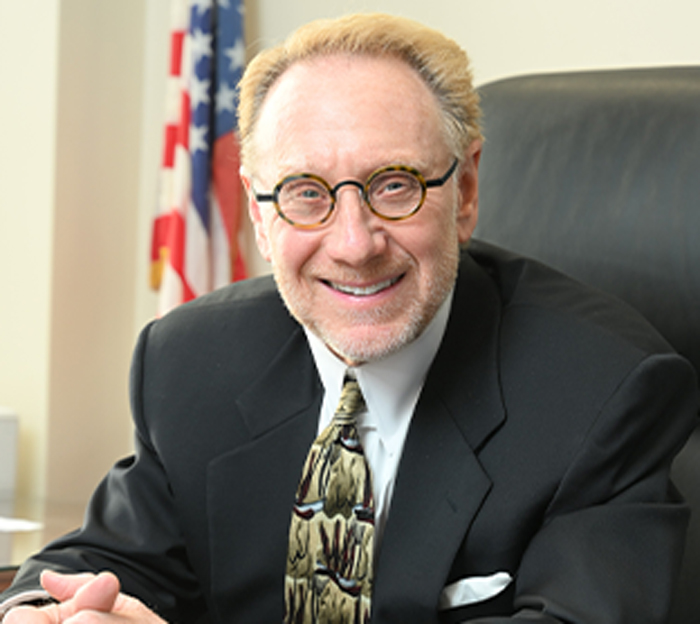 Judge Peter Allen Weinmann
Judge Peter Allen Weinmann is a first-generation American, the son of German Jewish refugees who fled Nazi Germany in search of safety and freedom. That family history has profoundly shaped his lifelong commitment to justice. Being born in the shadow of the Holocaust symbolizes both the continuity and resilience of the Jewish people: “My parents could easily have perished in the death camps,” he reflects “Instead, they were able to escape with their own parents and build a new life in America, instilling in me a deep sense of gratitude and responsibility.”
After a distinguished 35-year career practicing both civil and criminal law, Governor Kathy Hochul nominated Judge Weinmann to the New York State Court of Claims. Following confirmation by the New York State Senate, he was assigned to serve on the New York State Supreme Court. He earned his BA from Case Western Reserve University, his JD from Cardozo Law School, Yeshiva University, and his MPA from Harvard University. Throughout his career, first as an attorney and now as a judge, he has been guided by enduring Jewish values in the pursuit and dispensing of justice.
Three core Jewish teachings have consistently shaped his approach to both law and life: Tikkun Olam, the responsibility to repair and improve the world; the ethical framework embodied in the Ten Commandments; and the Biblical concept of B’tzelem Elohim – the belief that every human being is created in the Divine image and therefore possesses inherent dignity and infinite worth. “Those core tenets power me from behind the bench,” he notes.
Judge Weinmann and his wife, Amélida, have raised their four children with the same deep commitment to Jewish life and learning that has guided his own path, including active engagement with synagogue life at Temple Beth Zion, Jewish education through the Kadimah School, participation in Jewish summer camp, and opportunities for travel to Israel. Through both his professional service and family life, Judge Weinmann demonstrates how Jewish heritage can serve as a foundation for ethical leadership, civic responsibility, and a lifelong commitment to justice.